
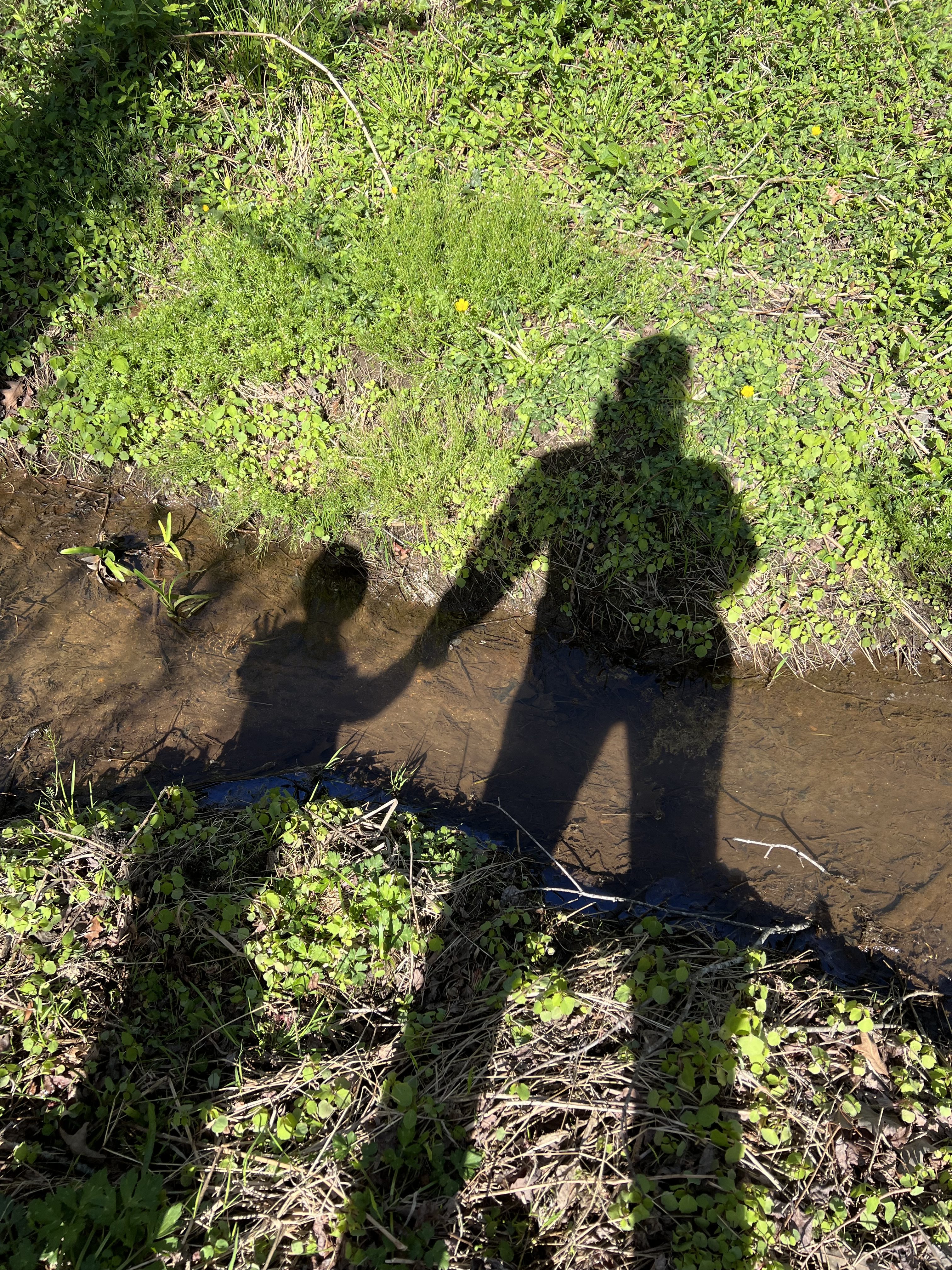
Being present doesn’t mean having a perfectly quiet mind or appreciating every moment. It means returning your attention to the life that is happening now, often in small and ordinary ways.
There are days when I move through my life so efficiently that I barely seem to inhabit it.
I’ll answer an email while thinking about dinner, unload the dishwasher while mentally rehearsing tomorrow’s schedule, and respond to someone I love without fully hearing what they’ve said. By the end of the day, I may have accomplished a great deal, yet feel strangely absent from the day itself. My body was there for all of it, but my attention kept slipping ahead, behind, or somewhere entirely different.
Most of us know this feeling. We arrive at a destination and realize we don’t remember the drive. We look up from our phones and notice the light has changed outside the window. We hear a child calling for us from another room and answer automatically, only to realize moments later that we can’t remember what they were trying to show us.
To be present is to bring enough of your attention to the moment that you can actually participate in it. It doesn’t mean you’ll never think about the future, revisit the past, feel stressed, or become distracted. It means you learn to notice when your mind has wandered away from your life, and you practice finding your way back.
That sounds simple. In practice, it can be one of the hardest things we do.
What it means to be present
Presence is often confused with a kind of permanent calm. We picture someone sitting quietly by the ocean, free from deadlines, noise, responsibility, and the endless stream of thoughts that usually follows us through the day.
But presence isn’t a state of perfect peace that some people achieve while the rest of us keep trying to catch up. It’s a way of relating to our experience. It asks us to notice what is here before we rush past it, explain it away, compare it to something else, or turn it into another item on a list.
Sometimes presence looks like hearing the person across from you before you begin forming your response. Sometimes it looks like noticing that your shoulders have climbed toward your ears and taking one slow breath before you continue. Sometimes it looks like standing at the kitchen sink with warm water running over your hands and realizing, for a few seconds, that you are alive in this exact body, in this exact home, on this exact day.
It may sound small, but small is where most of life happens.
Living more consciously begins with this kind of attention. It’s the willingness to pause long enough to recognize that our days are not simply things to get through on the way to a more meaningful future. They are the material of a life, arriving in conversations, routines, irritations, tenderness, responsibilities, and all the ordinary moments we’re tempted to overlook.
Why presence matters
Presence matters because it changes the texture of our experience.
The same day can feel entirely different depending on whether we move through it half-aware or fully engaged. A walk around the block can be another task between meetings, or it can become a moment to notice the weather shifting, the way the trees are beginning to leaf out, the sound of someone laughing in a nearby yard. Dinner can be a chore, or it can be the place where everyone in the house finally gathers long enough to tell the truth about their day.
None of this means every ordinary moment has to become profound. That would be exhausting, and it would make presence feel like another impossible standard. A meaningful life isn’t built from constant awe. It’s built from enough attention that we can recognize what matters when it appears.
Often, meaning doesn’t announce itself while it is happening. It appears later, in memory. A familiar voice from the other room. The way your child once pronounced a certain word. The ritual of making coffee with someone you love. A season that felt unremarkable at the time but now seems almost luminous because you can no longer return to it.
The more present we are, the more available we become to the relationships, places, and moments that shape us. We don’t preserve everything. We can’t. But we do begin to experience our lives with a little more depth and a little less distance.
Why it’s so difficult to stay present
The difficulty isn’t a personal failure. Modern life asks us to divide our attention constantly.
We plan, coordinate, respond, remember, compare, anticipate, and solve. Many of us are carrying jobs, households, relationships, health concerns, financial responsibilities, and the invisible work of remembering what everyone else needs. We’re surrounded by devices designed to interrupt us, platforms designed to keep us scrolling, and a culture that often treats busyness as evidence that we’re important.
There’s also a more private reason presence can feel difficult. Our minds often leave the present because they’re trying to protect us. Anxiety pulls us forward into imagined outcomes. Regret pulls us backward into conversations and choices we wish had gone differently. When life feels uncertain, planning can offer a temporary sense of control, even when there’s nothing we can actually solve in that moment.
This is part of why presence requires compassion. The mind isn’t always wandering because we’re careless or ungrateful. Sometimes it’s tired. Sometimes it’s afraid. Sometimes it’s learned to stay alert because life has taught it that alertness is necessary.
Understanding the obstacles to presence can make the practice feel less frustrating. It also helps us see that attention isn’t a switch we flip once and keep on forever. It’s something we tend, gently and imperfectly, over the course of a day.
If you’d like to explore those obstacles more fully, I wrote about why presence is so difficult.
Presence isn’t another standard women have to meet
There’s a version of presence that can quickly become another burden, especially for mothers and women who already feel pressure to be endlessly available, appreciative, patient, and emotionally attuned.
You may have heard the reminders to cherish every stage, soak it all in, and enjoy every moment because it goes by so quickly. There is tenderness in that impulse, but it can also create guilt. It can make a hard day feel harder because, somewhere beneath the exhaustion, there’s the added fear that you’re failing to appreciate a season you’re supposed to treasure.
Presence doesn’t require you to enjoy every part of your life. It doesn’t ask you to turn sleepless nights, overstimulation, grief, resentment, or ordinary boredom into something beautiful before you’re ready. It doesn’t mean you have to smile through a difficult season because you know you may someday miss pieces of it.
A hard moment can simply be hard. You can love your child deeply and still want five minutes alone. You can feel grateful for your life and still feel overwhelmed by it. You can want to be more present without pretending that your attention will never drift.
The practice isn’t about getting it right. It’s about staying in relationship with your own life, including the parts that are messy, inconvenient, and unresolved.
Making more room for presence
Presence rarely arrives through a dramatic transformation. It grows through small choices that make it easier to notice where you are.
Notice when you’ve gone elsewhere
The first step isn’t forcing yourself to focus harder. It’s simply becoming aware of the moment you have left.
You might be folding laundry while replaying an old conversation, driving while rehearsing tomorrow’s to-do list, or sitting beside someone you love while your mind races through everything that still needs to be done. There’s no need to criticize yourself when you notice this. In fact, the noticing is already part of the practice.
A simple internal question can help: Where am I right now?
Not where is your body. That answer is usually obvious. The more useful question is where your attention has gone. Is it in the past? Is it in the future? Is it tangled in a worry that hasn’t happened? Is it trying to solve a problem that can’t be solved in this moment?
Once you see where your mind has gone, you can decide whether it needs your attention or whether you can come back to what’s in front of you.
Let transitions become small thresholds
Many of us move from one part of the day to the next without ever really arriving anywhere.
We leave one meeting and immediately open another tab. We walk through the front door while checking our phones. We move from work into dinner, from dinner into bedtime, from bedtime into the next unfinished task. The day becomes a long chain of transitions that we barely register.
One way to make more room for presence is to give yourself a few seconds between things. You don’t need a perfect ritual or a long meditation practice. You might pause in the car before walking into the house. You might take one breath before opening your laptop in the morning. You might stand at the sink after dinner and let yourself feel the shift from one part of the evening into another.
These small thresholds create a sense of arrival. They remind the body and mind that something has changed, and that you’re allowed to enter the next moment with more intention than momentum.
Give one small thing your full attention
Presence becomes more accessible when we stop trying to be aware of everything all at once.
Choose one thing that’s already part of your day and give it your full attention for a few moments. Drink your coffee without scrolling. Listen to one song without doing anything else. Feel the water when you wash your hands. Step outside and notice the temperature before you begin thinking about what needs to happen next.
This isn’t about making ordinary tasks sacred through effort. It’s about giving your attention somewhere to land.
The world becomes more detailed when we stop treating it as background. The foam on the top of your chai latte, the sound of rain against the windows, a dog stretching in a patch of sunlight, the first bite of something warm, the familiar weight of a child leaning against your side. These things are already here. Presence helps us notice that they’ve been here all along.
Let your body help you come back
When the mind feels scattered, the body can become a useful way back.
You can notice your feet on the floor, your hands resting in your lap, the rise and fall of your breath, or the feeling of air against your skin. You can take a slow walk and pay attention to the rhythm of your steps. You can look around the room and name a few things you can see without evaluating them or turning them into a task.
The goal isn’t to force yourself into calm. It is to give your attention something immediate and real.
This can be especially helpful when anxiety is pulling you into the future. You may not be able to think your way out of every worry, but you can often remind yourself that you are here, in this moment, before the imagined future has arrived.
Follow curiosity when it appears
Children are often better at presence than adults, not because they’ve mastered mindfulness, but because they’re willing to be interested.
They stop for the bug on the sidewalk. They want to know why the moon is out during the day. They can spend ten minutes watching water move through a storm drain or studying the small pieces of gravel at the edge of a driveway. Their attention isn’t always practical, but it’s alive.
As adults, we often dismiss these moments because we’re in a hurry or because we think we’ve already seen what’s there. Another tree. Another flower. Another sunset. Another walk around the block.
But familiarity can make us blind to the details that make a moment distinct. Curiosity interrupts that habit. It asks us to look again.
You don’t have to become endlessly enchanted by everything around you. But it can be surprisingly restorative to stay with something for a few seconds longer than you normally would. To let a question arise. To notice what you might have missed if you had kept moving.
Return without making it a judgment
The most important part of presence may be the return itself.
You will forget. You will rush. You will answer absentmindedly, scroll longer than you meant to, live ahead of yourself, and miss moments you wish you had noticed. This is part of being human, not proof that you’re doing the practice wrong.
The invitation is to return without turning the return into self-criticism.
You can come back to your breath. You can come back to the person across from you. You can come back to the meal you’re eating, the room you’re sitting in, the sunlight moving across the floor, or the small hand reaching for yours.
There’s no scorecard. There’s simply another opportunity to meet the life that is already here.
Presence with the people we love
Presence is often discussed as an individual practice, but it’s also one of the ways we communicate love.
People can feel when we’re really with them. They can feel the difference between being listened to and being managed, between being glanced at and being seen. This is especially true with children, who are often asking for our attention in ways that seem small but are not small to them.
When a child says, “Look,” they’re rarely asking for a lecture or a lesson. They’re inviting us into the world as they see it. A bug on a leaf. A rock that looks like a heart. A shadow that has stretched across the driveway. Something that may be ordinary to us but has become extraordinary to them because they’re still close enough to wonder.
We cannot meet every invitation. No one can. There will be moments when we need to finish the email, make dinner, take the call, or simply have a quiet minute to ourselves. But when we can pause and enter someone else’s moment with them, even briefly, we strengthen the relationship between us.
Presence says, in its quiet way: I am here. I see what matters to you. I am willing to let this moment be enough for a little while.
Presence makes a life more visible
The more I think about presence, the less I see it as a way to escape life’s difficulty and the more I see it as a way to encounter life honestly.
Being present doesn’t protect us from grief, uncertainty, or change. In some ways, it makes us more aware of them. It lets us notice that our children are growing, that seasons are passing, that people we love are changing, and that we’re changing alongside them.
But it also lets us notice what’s still here.
The friend who calls. The hand that reaches across the bed in the dark. The familiar drive home. The laughter from another room. The rituals that seem insignificant until we realize they’ve become part of the architecture of our lives.
We often assume life goes by quickly because time is moving too fast. Sometimes it feels that way because we’ve been asked to move through so much of it without stopping long enough to see where we are.
Presence can’t slow time. It can’t keep our children small, make difficult seasons easier, or hold every good thing in place. What it can do is help us live with our eyes open.
Continue reading
- Why Presence Is So Difficult
- How Children Teach Us Presence
- Why We Miss the Life We’re Living
- How to Find Meaning in Everyday Life
If You’re Wondering…
What does it mean to be present?
Being present means bringing your attention to the moment you are currently living. It does not mean you never think about the past or future. It means you notice when your mind has drifted away and make a gentle choice to return to what is happening now.
How can I become more present in everyday life?
Start small. Notice one ordinary moment each day without multitasking, such as drinking coffee, walking outside, listening to someone you love, or taking a few slow breaths before moving to the next task. The goal is not perfect focus. It is building the habit of returning.
Why is it so hard to stay present?
Presence can be difficult because our minds are often managing responsibilities, worry, planning, memory, and constant digital interruption. For many people, mentally leaving the present is also a learned response to stress or uncertainty. Difficulty with presence is common and does not mean you are failing.
Is presence the same as mindfulness?
They are closely related. Mindfulness is often used to describe the practice of paying attention to the present moment with openness and without judgment. Presence is the lived experience of bringing that awareness into daily life, relationships, routines, and ordinary moments.
Can meditation help me become more present?
Meditation can help because it gives you practice noticing when your attention has wandered and bringing it back. However, you do not need a formal meditation practice to become more present. Small moments of attention throughout the day can be just as meaningful.
How can I be more present with my children?
Try meeting a few of their invitations for attention each day without dividing your focus. Look at what they are showing you, listen to the full story, or stay with their curiosity for a few moments longer than usual. You do not need to be available every second. Consistent moments of genuine attention matter.
Does being present mean I should stop planning for the future?
No. Planning is necessary and often wise. Presence simply asks that the future does not become the only place your mind is allowed to live. You can care for what is ahead while still participating in the day that is happening now.
A gentle reflection
There will always be something ahead of us. Another responsibility, another milestone, another season we hope will be easier or clearer than the one we’re in.
The work is not to stop caring about what comes next. The work is to remember that while we’re looking ahead, a life is unfolding around us.
It may be imperfect. It may be noisy. It may be full of unfinished tasks and competing needs. But it’s still yours.
And each time you notice that you’ve wandered away from it, you can come back. Not with force. Not with shame. Just with the quiet recognition that you are here, and that this moment is asking to be lived.
Leave a Reply